Frequently Asked Questions

Find information about 4-H Ontario Registration, Programming, Associations and more!

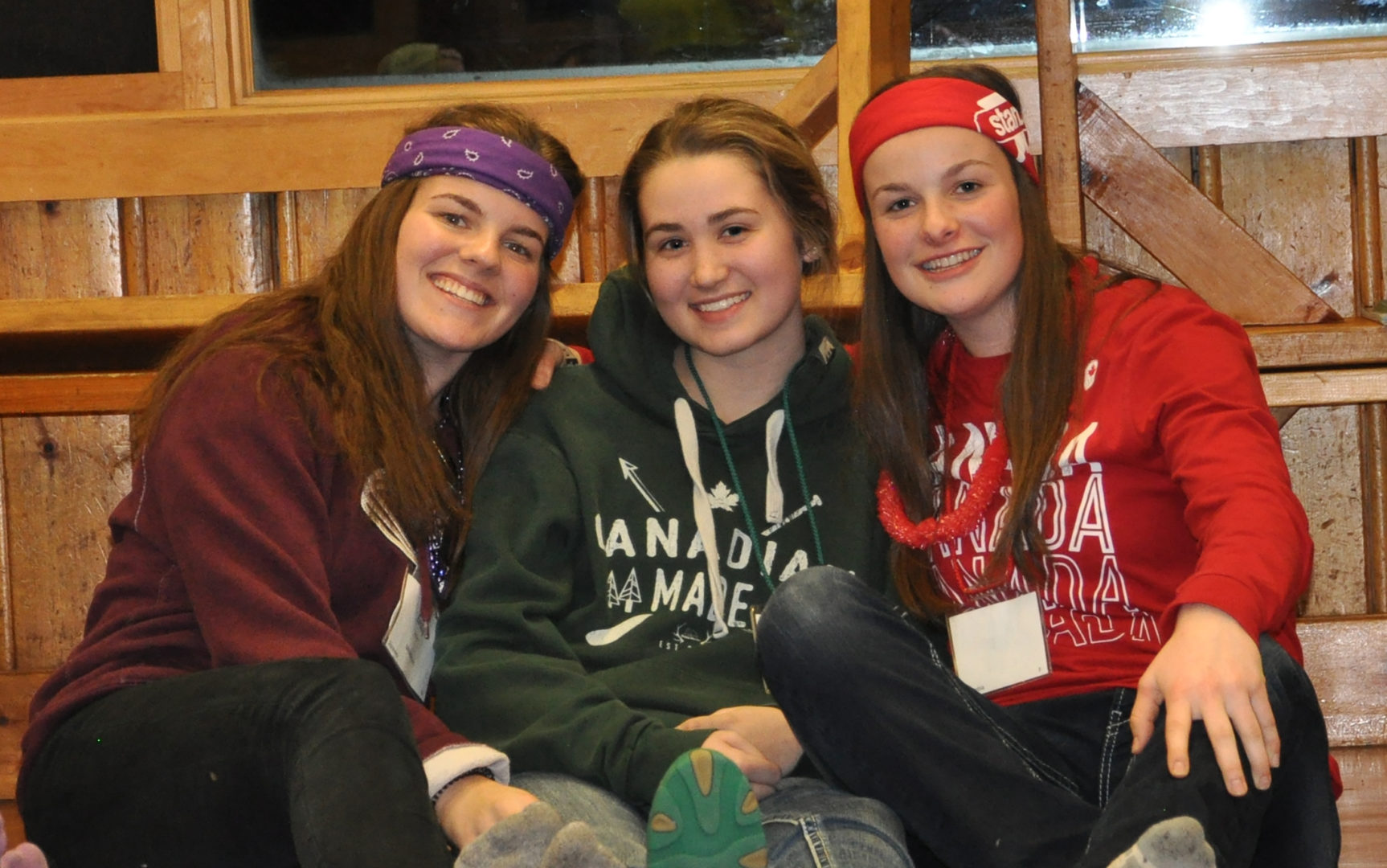
Three youth sitting together at 4-H Camp

FAQ For Parents

4-H Registration

When you register, your child has access to:

  • Local clubs and events across Ontario
  • Hands-on projects in areas like agriculture, STEM, cooking, and more
  • Online project options
  • Provincial and national opportunities
  • Scholarship opportunities for 4-H youth pursuing post-secondary education or training

Please note:

  • There are often additional costs for provincial or national opportunities to cover the cost of accommodations, transportation and meals.
  • Some local associations may charge additional fees. Visit your association’s website to learn more.
  • Not all projects are available in every area or year-round. Check out available projects here: https://4-hontario.ca/youth/available-projects/

The 2026 annual participation fee is $120 and youth can participate in as many projects as they’d like. However, some associations may charge an additional fee or run a subsidy program to reduce the participation fee. Please inquire with your local association to confirm.

4-H associations that offer participant fee subsidy programs are responsible for communicating and administering the wage subsidy programs to the 4-H youth and families in their association. Please connect with your local association about the timelines associated with their participant fee subsidy program.

4-H associations who charge additional fees are responsible for communicating and organizing such fees with the 4-H youth and families in their association. Please connect with your local association about the timelines and processes associated with additional fees.

B‐BSR‐14 Provincial Participant Fee Refund Policy

Refunds for the Provincial Participant Fee will be granted as follows:

Full refund of provincial participant fee less a $10.00 administration fee if written request is received by 4‐H Ontario within seven (7 days) of registration date.

50% refund of provincial participant fee if written request is received by 4‐H Ontario within 30 days of registration date and less than two (2) club meetings attended

No refunds after 30 days of registration date.

Exceptions may be granted under extraordinary circumstances providing the request is submitted in writing to 4‐H Ontario and clearly identifies the reason for the exception.

Refund requests should be sent to database@4-hontario.ca Please submit the date of registration, name on credit card used, member name and reason. Please note, refunds may take at least 30 days to be processed.

If you do not know your Participant ID number, please contact database@4-hontario.ca.

Programming

Both cloverbuds and youth participants complete the same registration process every year here.

Cloverbuds is for youth ages 6–8 (as of December 31 of the previous calendar year), while youth participants are between ages 9–21. Each group participates in age-appropriate 4-H experiences and activities!

When you register your child again when they’re 9, they will be considered youth participants, and have access to participating in all 4-H projects.

Note: Cloverbuds cannot participate in traditional 4-H projects.

A 4-H club is a group of a minimum of six (6) eligible youth and two (2) 4-H Ontario volunteers in good standing (Policy O-V-14) who are involved in club leadership/activities. A 4-H club may complete a 4-H project as part of their club activities. Some 4-H clubs may come together to complete one 4-H project over the course of a year, such as the dairy project. In other cases, a 4-H club may come together to complete multiple 4-H projects over the course of a year. For example, a life skills 4-H club may complete a cooking project, sewing project and the ‘On Your Own’ project within one year. It is up to the volunteer’s discretion to determine the 4-H club’s structure and activities.

Associations

A 4-H association is a local chapter of 4-H Ontario. Each association leads clubs and activities for different areas of Ontario. When you register, you’ll join the association that serves your community.

Much of your 4-H experience will happen within your association, but everyone is a 4-H Ontario participant and receives the provincial organization benefits including insurance coverage, programming, resource development and volunteer support.

Your 4-H Association is based on your geographic location and usually follows the boundaries of your local county or regional municipality (for example, Wellington County or Peel Region). These associations are regional groups that deliver 4-H programming, opportunities and support within their communities.

To find your local 4-H Association, please visit the 4-H Association page and enter your postal code.

Can’t find your 4-H Association?

Please contact 4-H Ontario for assistance or try the Association Interactive Map.

Yes! As a registered 4-H participant, you can take part in activities offered by any association in Ontario, not just the one where you initially registered. Please note, some associations may charge a border hopping fee for participants from other associations. We encourage you to contact the prospective 4-H association before you sign up for a project/opportunity to confirm whether any additional fees apply.

Not to worry – there is a 4-H association in every location across Ontario! If no association appears when you enter your postal code, please email 4-H Ontario and we can help you identify your association. In the meantime, you may also try using the Association Interactive Map to find your association.

FAQ For Volunteers

Programming

All 4-H Ontario volunteers must complete the 4-H Ontario volunteer candidate acceptance process to ensure the safety and integrity of our program, and to better understand your talents and interests. The acceptance process includes:

  • An online application
  • Interview with local 4-H Association screening committee,
  • Reference checks – to be submitted with application and completed through our electronic system,
  • Completion and submission of a Vulnerable Sector Criminal Record Check,
  • Completion of a New Volunteer Orientation,
  • Completion and submission of designated Child Protection training.

Apply to become a volunteer here.

Regardless of best intentions, accidents sometimes do happen, and conflict or behavior arise that you need support with. An incident report is used to document any concerns related to youth safety, injuries, property damage or code of conduct infringements.

The following table describes numerous type of issues that vary in severity. You can use the following table to help you determine if you need to complete an incident report. Those examples listed in the not reportable column do not require an incident report, while those in the other column require an incident report. Remember, when in doubt, fill it out.

Find the full guide on incident reporting here.

If you need to complete an incident report, you can do so using the  4-H Canada isight portal. To find more information and access resources related to youth safety and risk management, visit https://4-hontario.ca/about-4-h/incident-reporting/

Click to download a copy of the following 4-H Ontario How to Start a Club Guide

4-H Ontario How to Start a Club Guide

4-H Ontario How to Start a Club Guide

In addition, add your new project to the Available Projects Library by visiting this page: https://4-hontario.ca/youth/add-a-project/

Note: The “Add a Project” page is password protected. Existing volunteers can find the password in the email titled “Your 4-H Volunteer Status.” New volunteers will receive the password once they’ve completed all steps to become a volunteer in good standing. If you cannot find this email, contact your Volunteer Support Staff.

Certificates of Insurance provide confirmation of insurance coverage in the event of injury and/or property damage during a 4-H activity. Please note that these certificates do not replace the requirement to follow facility regulations or 4-H safety protocols.

Certificates of Insurance may be requested by a facility where a 4-H activity is taking place and are valid April 1 to March 31 each year. Only one certificate is required per facility for that period, regardless of how many 4-H activities take place at the location.

Note: If an event spans dates before and after April 1, two separate requests will be required, one for each coverage year.

To request a Certificate of Insurance, please complete the Request for Insurance Certificate form here  and submit it to standards@4-hontario.ca

The Cloverbud program and 4-H projects are both lead by volunteers in good standing; however the program structure, activities and depth of topics discussed vary to meet age appropriate needs of the youth. With 4-H projects, volunteers lead a project about one topic and each meeting includes activities related to that topic. In the Cloverbud program, each meeting is about a different topic so that youth can learn about all things 4-H has to offer. One week they could be learning about sheep and the next they could be learning about sports.

Both programs come with project manuals to support you in planning your meetings and activities. Find the manuals here.

Each association has their own board of directors to administer the 4-H Ontario program locally. This ensures that volunteers have a strong influence and can be active in their local program. Each board of directors will consist of a president, vice president, association representative, secretary and treasurer, along with additional directors in some cases. Associations will also have volunteers serve in additional support roles such as membership coordinator, screening contact or webmaster to help manage the association.

FAQ about 4-H Ontario

4-H began in Ontario in 1915 as part of a government-led program to teach youth agricultural skills. While the program was managed under the Ministry of Agriculture for numerous years, 4-H Ontario became an independent charity in 2000. Today, it’s governed by a volunteer-led council and supported by staff, with funding from both government and community sources.

The four “H’s” stand for Head, Heart, Hands and Health. They are the core values that guide the 4-H program. The motto, Learn To Do By Doing, reflects the hands-on approach 4-H takes to help youth build real-life skills, grow through experience and contribute to their communities.

The pledge encompasses the main goal of the 4-H program: to develop well-rounded, responsible and independent youth who are contributing citizens to their club, community, country and world. It is said at the beginning of every 4-H event or meeting.

The 4-H pledge is:

‘I pledge
My Head to clearer thinking,
My Heart to greater loyalty,
My Hands to larger service,
My Health to better living,
for my Club, my community, my country and my world.’

Please see the document below for more information.

4-H in Canada – Insurance Overview

The Ontario 4-H Council governs the 4-H Ontario program, which provides youth with resources and opportunities to develop into responsible, contributing and caring leaders who create positive change in the world. You can learn more about the structure of the Ontario 4-H Council here. The Ontario 4-H Council is a registered charity and you can make a donation to directly support youth programming.

The Ontario 4-H Foundation was founded as a charitable organization with the purpose of ensuring financial security of 4-H Ontario activities for the future.  The Foundation is made up of ‘Foundation Trustees’ who volunteer to serve and share their expertise on fundraising, networking, financial management and assist staff with sponsorship and donations. You can make a donation to support the long-term sustainability of 4-H in Ontario.